
Last verified: April 2026
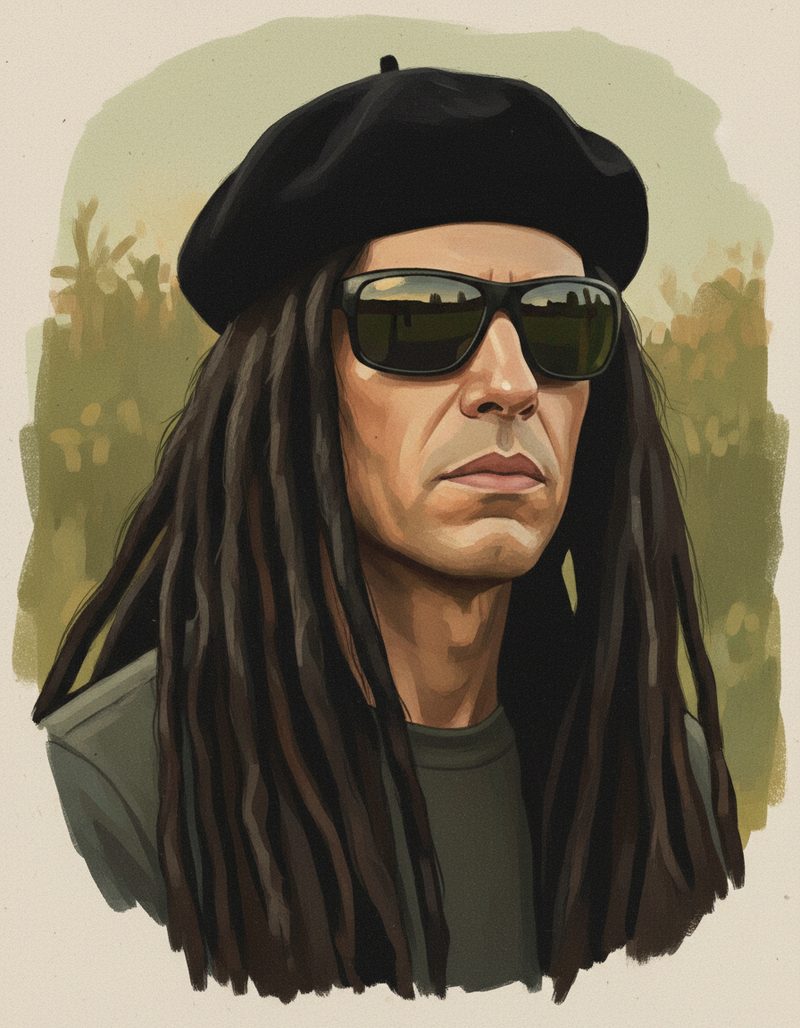
Who He Is
Jorge Cervantes is the longtime pen name of George Van Patten, an Oregon-born horticultural journalist, educator, and author who has written the single most widely used cannabis cultivation textbook in the English-speaking world — and the Spanish, French, German, Italian, Dutch, Russian, Portuguese, and Czech-speaking worlds as well.
High Times has called him, in print and on camera, "the most trusted name in marijuana cultivation." He is, in the cultivation community, something closer to what Julia Child was for American home cooking: a patient, meticulous, endlessly re-published teacher whose books are on the shelf of essentially every serious grower, every legal cultivation operation, and every cannabis-adjacent reference library.
Key Contributions
- Marijuana Horticulture: The Indoor/Outdoor Medical Grower's Bible (first published 1983; now in its 5th edition). Over 500,000 copies sold in 8 languages. The book covers seeds, clones, soil, hydroponics, lighting, airflow, pests, nutrient cycles, harvest timing, curing, and storage in a working-grower register that assumes the reader wants functional plants, not theory. Nicknamed simply "the Bible" across the cultivation community.
- The Cannabis Encyclopedia (2015). A larger, more visual reference volume that won the Benjamin Franklin Gold Award from the Independent Book Publishers Association. Covers cultivation, processing, medical applications, and product categories across 596 pages.
- "Jorge's Rx" column at High Times (approximately 2003–2013). A Q&A column where readers submitted cultivation problems — mold, nutrient burn, light cycle failures, poor trichome development — and Cervantes diagnosed them. The column ran for approximately ten years and is still cited by growers working through similar problems.
- Books and instructional video. Beyond the two flagships, Cervantes has authored Indoor Marijuana Horticulture, Jorge Cervantes' Ultimate Grow DVD, and the Spanish-language Marihuana Horticultura del Cannabis, among others. His work is continuously updated as cultivation technology evolves.
Signature Moments
The 27-year disguise. From the first edition of Marijuana Horticulture in 1983 through roughly 2010, Cervantes did public appearances — trade shows, High Times Cannabis Cup events, book signings — wearing a disguise: long black dreadlocks (a wig), a black beret, and dark glasses. The reason was practical: cannabis cultivation instruction in the United States, for most of his career, was federally illegal under conspiracy-to-cultivate statutes, and Van Patten had a family and a house. He concealed his real identity for 27 years, until changes in U.S. cannabis law and his own assessment of the risk environment made it safe to appear as himself.
The methodical voice. Readers often remark that Cervantes's writing has a distinctive register — patient, numeric, unexcitable, with a preference for specifications and photographs over anecdote. His books will tell you the exact photoperiod for flowering induction, the exact EC range for a given growth stage, and the exact humidity band for curing — and then show a photograph of what the plant looks like if you got it wrong. That tone has made him the standard reference even for growers whose politics, aesthetics, or cannabis philosophy differ sharply from his.
Because a startling amount of cannabis etiquette is downstream of cultivation. Knowing the difference between well-cured and poorly cured flower — and being able to say so without being a snob — is a social skill. Understanding that mold is a real risk, that humidity matters, that a gifted ounce from an unknown home-grow might not be safe to smoke, all comes out of the body of knowledge Cervantes codified. Respecting your host's home-grown flower the way you would respect their home-cooked dinner is only possible if you know what you're looking at.
Legacy and Current Status
Cervantes continues to write, edit new editions of Marijuana Horticulture, and speak at international cannabis conferences, where he now appears under his own name. He has been inducted into multiple cannabis halls of fame. His books are used as informal textbooks in cannabis horticulture programs at community colleges and private training academies, including programs at Oaksterdam University in Oakland, California.
His contribution is arguably the most quietly load-bearing on this list. Without his work — and the work of the people he taught — the leap from underground cultivation to today's licensed, lab-tested, consistent legal flower would have been much slower and more chaotic than it was. Every consumer who has ever walked into a dispensary and bought an eighth with a specific terpene profile and a specific THC percentage is the beneficiary of cultivation knowledge that, for decades, Cervantes was one of the very few people willing to write down at all.
Start with The Cannabis Encyclopedia (2015). It is the most accessible, the most visual, and the most useful for a reader who is curious rather than actively growing. Then, if you are actively growing — even a single plant in a legal home-grow state like California, Michigan, or Oregon — move to Marijuana Horticulture, which is the working manual.
For the political context that made his long disguise necessary, see our Jack Herer profile. For the dispensary side of the cultivation-to-retail pipeline, see our Berner profile.
For in-depth cannabis education, dosing guides, safety information, and research summaries, visit our partner site TryCannabis.org