
Last verified: April 2026
Why Cash Still Rules
Cannabis is a Schedule I controlled substance under federal law. Every major card network — Visa, Mastercard, American Express, Discover — has policies prohibiting merchants from knowingly processing cannabis transactions. Banks that facilitate cannabis payments risk federal banking penalties under the Bank Secrecy Act. The result, as of April 2026, is that 70 to 90 percent of dispensary transactions in the United States are paid in cash, according to point-of-sale data from Flowhub and other POS operators.
This is not the dispensary’s preference. Most store owners would love to swipe a Visa card like any other retail business. The cash economy creates security risks (robberies, armored-car contracts), accounting complexity, and awkwardness for customers who haven’t carried cash in years. But the federal-state conflict has not resolved, and until it does, cash is the default.
Your Realistic Payment Options
1. Cash (the default)
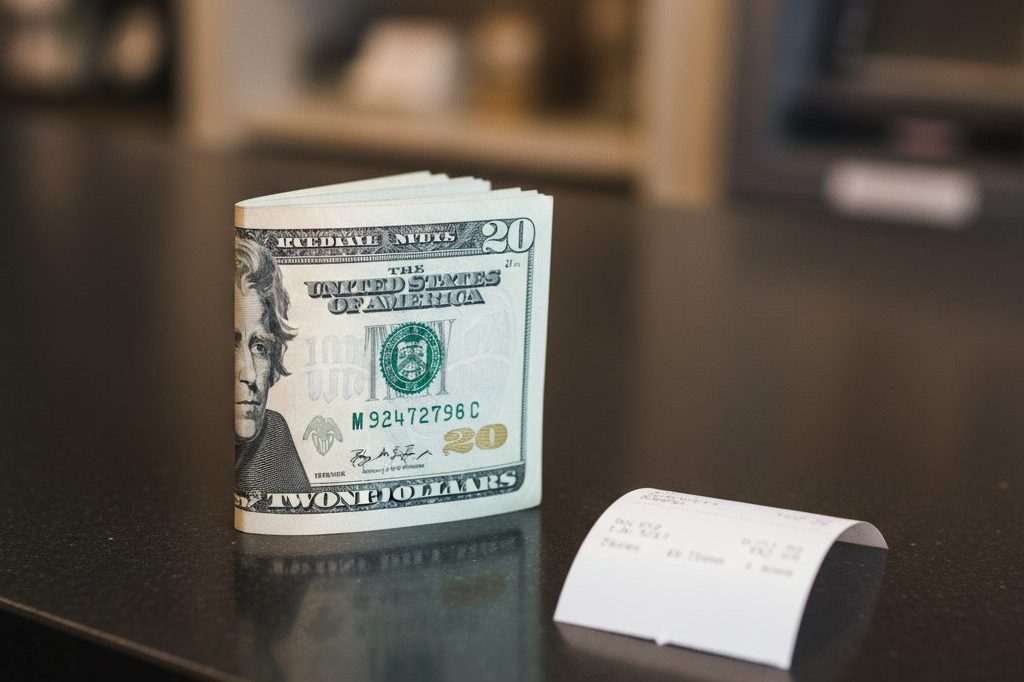
Bring cash. Plan for the sticker price plus 20 to 40 percent state and local cannabis tax. Washington State’s combined rate hits 37 percent. California’s can exceed 35 percent in some cities. Colorado is gentler at around 20 percent. If the menu shows $40 eighths, budget $55 to be safe. Dispensaries round to the dollar and most don’t break bills larger than $100 gracefully. A mix of twenties and fives works best.
2. The Cashless ATM (the most common non-cash option)
A “cashless ATM,” also called a point-of-banking terminal, is a device that processes your debit card as if you were withdrawing cash at an ATM — then applies the withdrawal directly to your purchase. It rounds up to the nearest $5 or $10, gives you the change back in cash, and charges a fee of $3 to $8 per transaction. You’ll see this as “ATM WITHDRAWAL” on your bank statement, not a cannabis transaction.
The legal status is shaky. In July 2023, Mastercard formally asked issuing banks to stop processing cashless-ATM transactions at dispensaries, citing network rule violations. Many stores lost the service and scrambled to replace it. Others kept it running quietly. As of April 2026, cashless ATMs are still available at a majority of dispensaries but availability changes month to month. Call ahead if you’re relying on it.
Credit cards are effectively never accepted at licensed dispensaries — the networks don’t allow it. Some debit transactions are processed through cashless-ATM workarounds and PIN debit networks. Credit cards attempting to run as debit will almost always be declined. Don’t leave your checkbook or credit card as your only payment plan.
3. CanPay (ACH bank transfer, 800+ locations)
CanPay is the largest compliance-first cannabis payment platform in the United States, accepted at more than 800 dispensary locations across 30+ states as of early 2026. You enroll by linking a U.S. bank account (no card), download the CanPay app, and generate a single-use QR code at checkout. The budtender scans it, funds pull directly from your checking account via ACH, and you get an email receipt. No fees for the consumer. No “cannabis” flag on your bank statement — it appears as a CanPay merchant transaction.
CanPay is the closest thing the cannabis industry has to Apple Pay. If your regular dispensary accepts it, the time saved at checkout and the elimination of cash-ATM fees make enrollment worth the five-minute setup.
4. Dutchie Pay by Bank (ACH, integrated POS)
Dutchie Pay, built by the dominant dispensary e-commerce platform Dutchie, operates similarly — you link a bank account through the dispensary’s checkout flow and pay via ACH with no consumer fee. Dutchie Pay is built directly into Dutchie-powered online menus and in-store POS systems, which means it’s seamless at Dutchie-partnered stores but unavailable elsewhere. Check if your regular dispensary runs on Dutchie before assuming it’s an option.
5. Aeropay, Hypur, Paybotic (smaller regional platforms)
Several smaller ACH platforms operate regionally — Aeropay is common in Illinois and New York, Hypur in Arizona and Nevada, Paybotic in Florida. They all work similarly: link a bank account, pay via ACH, no consumer fee. Availability varies by store. Ask at the counter what they accept.
The SAFE Banking Act Status
The Secure and Fair Enforcement (SAFE) Banking Act is federal legislation that would prohibit federal banking regulators from penalizing banks and credit unions that serve state-legal cannabis businesses. It would, effectively, open the door to normal card processing at dispensaries. The bill has been introduced in every Congress since 2013. It has passed the House multiple times. It has never passed the Senate, though it has come close.
As of April 2026, SAFE Banking (sometimes re-branded as the SAFER Banking Act) remains under consideration but has not cleared Congress. Don’t plan your dispensary trip around the assumption that it will pass this week. Bring cash.
Practical Cash Handling
- Estimate high. A $60 cart at online-menu pricing is frequently an $82 cart after tax. Bring 30 percent more cash than the menu suggests.
- Use the ATM in the lobby if you have to. Those ATMs charge $3 to $6 per withdrawal. It’s annoying but not catastrophic — and far better than making a second trip.
- Don’t walk around with huge amounts of cash after. Cannabis is a legal product but carrying $500 out of a dispensary in a high-theft area is the same risk as any other cash retail trip. Be smart about the route home.
- Save your receipt. Dispensary receipts are tax documentation. In some states, medical patients can deduct cannabis purchases under medical expenses — check with a tax professional.
None of the major consumer payment apps process cannabis transactions. Apple Pay, Google Pay, Venmo, Cash App, Zelle, PayPal — all prohibited by policy. If a dispensary offers you Venmo at checkout, they’re doing it against the platform’s terms of service and your account could be frozen. Stick to cash, cashless ATM, CanPay, or Dutchie Pay.
Why It Feels Weird
Paying $80 in cash for a legal, lab-tested, state-taxed consumer product in 2026 is jarring. It is a daily reminder that cannabis exists in a federal-state legal purgatory, and that the industry is still waiting for banking normalization that keeps being promised and keeps not arriving. Budtenders feel it too. Most of them would rather swipe a card than count your twenties. The best thing a customer can do is arrive prepared, tip in cash when service warrants it, and support your state’s representatives who back banking reform. Until then — cash.
For in-depth cannabis education, dosing guides, safety information, and research summaries, visit our partner site TryCannabis.org