
Last verified: April 2026
The Rule, in One Sentence
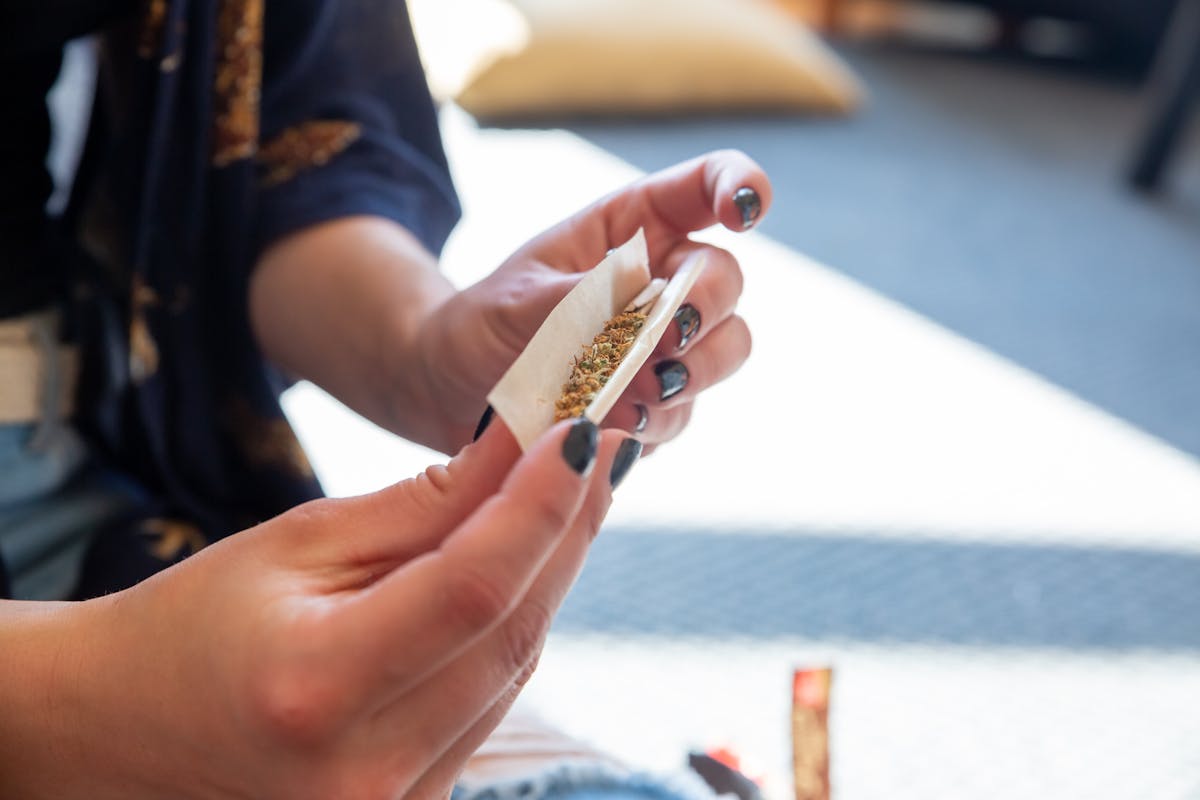
The person who rolls the joint takes the first puff. Every other smoker in the circle waits. Rolling is a small act of craft, and the first pull is the small ceremonial recognition of that craft. Violating this rule is not the worst thing you can do in a sesh, but it is the easiest way to accidentally signal that you do not know the tradition.
Where "Roller's Rights" Came From
Like most cannabis etiquette, roller's rights has no single founding document. The custom grew organically out of two intertwined realities of pre-legalization cannabis:
- Rolling well is a genuine skill. A badly rolled joint runs, canoes, or falls apart. A well-rolled joint burns evenly for twenty minutes and gets every smoker in the circle a clean puff. In a pre-dispensary era, every circle had one or two people who were the rollers — and letting them light what they built was a way of saying thank you.
- The roller has done the work of inspecting the flower. They ground it. They broke up stems. They spotted seeds. They know if there's anything hot or stale inside. The first pull has a quality-control element — the roller is checking that the joint burns right before the rest of the circle inherits it.
Both reasons still hold up. Modern pre-grinders and gravity-filled cones have made rolling less of an artisan skill, but the underlying principle — respect the labor — has carried forward.
A first-puff inspection is real. If the joint canoes immediately (burns unevenly down one side), the roller can often save it with a small moisture correction on the hot edge. If a stem was missed and the joint crackles, the roller can pinch it out. Doing any of that after three smokers have already hit it is much harder.
Roller's Rights vs. Weed Provider's Rights
These are two different honors that often overlap but do not always. The cleanest way to think about it:
- If one person both supplied the flower and rolled the joint, they get the first puff. Unambiguous.
- If one person supplied the flower and a different person rolled the joint, the roller still sparks it — but the supplier gets the second puff, before the rotation begins normally. This way both contributions are honored.
- If multiple people collaborated on rolling, the person who did the most structural work (the one who actually closed and twisted the joint) takes the first puff, and the collaborator takes the second.
- If the roller offers the first puff to someone else — a guest, an elder, the birthday person, that overrides the default. The roller retains the right but has chosen to pass it.
What "Sparking It" Actually Involves
The roller's first act is the light itself — often with a small ritual flourish. A well-done first light involves:
- Rotating the joint while lighting. This is to get an even "cherry" all the way across the tip. A joint lit on one side only will burn unevenly (canoe) from the start.
- Taking a single slow pull, not a lung-filling drag. This confirms the airflow is good and the joint is drawing cleanly.
- Exhaling away from the circle. First smoke is the thickest.
- Passing with a small eye-contact gesture to the next person. This is how you signal the rotation has officially started and in which direction it's going.
Why It Matters — Beyond Tradition
A cynic could argue roller's rights is just a status symbol. But follow the rule across an evening and you see its real function: it rewards the person who actually contributed labor. Cannabis culture, especially in its pre-legalization form, ran on unpaid labor — the person who drove to get the flower, the person who broke it down, the person who rolled enough joints to last the night. Roller's rights is a tiny economy of gratitude. It keeps the labor of hosting visible.
In that sense, roller's rights is closely related to consideration and respect — the two of Lizzie Post's three foundational etiquette principles that this rule most directly embodies.
If You Are the Roller
Take your puff without ceremony. Do not make a production of it. The point is to honor the labor, not to announce it. Light, puff, pass. If the joint needs correction, make it quick — the circle is already waiting.
If you want to offer the first puff to someone else, do it with a simple gesture: "you want the first?" Holding out the unlit joint and lighter works without words. The person receiving the offer should accept graciously or decline graciously. This is not the moment for a long back-and-forth.
If You Are Not the Roller
Wait. Do not reach. Do not say "let me hit it first." Even if you are the host, the oldest person in the room, or the one who bought the cannabis, the roller's first puff is not yours to take. If the roller offers it to you — which is their right — accept with a small thank you and don't hog it.
In many friend groups, one person is always the roller. This is fine as a practical matter but can become a quiet resentment over time, especially if that person supplied the cannabis too. If you're in a regular circle with one designated roller, consider learning to roll yourself — even badly. Rotating the labor, not just the joint, is part of a healthy long-term sesh.
Exceptions and Modern Updates
Some cases where roller's rights shifts or goes away:
- Pre-rolls from a dispensary. No one rolled it — a factory did. The person who brought the pre-roll (the "provider") typically gets the first puff instead.
- Machine-rolled cones filled by the supplier. The supplier fills the cone, so they get the first puff.
- Large group sessions with multiple joints rolled in advance. Each joint gets its own roller's-rights honor when that joint is lit.
- Medical contexts. If someone in the circle is a medical patient who needs relief, many groups honor "medical patient first" above roller's rights. The patient accepts or declines.
For the full smoking-session rulebook, start at the overview or brush up on puff-puff-pass.
For in-depth cannabis education, dosing guides, safety information, and research summaries, visit our partner site TryCannabis.org