
Last verified: April 2026
The Most Emotionally Delicate Context
There is no cannabis occasion more sensitive than a funeral. Families are raw, under-slept, and often navigating religious, cultural, and generational differences at a moment of acute emotional weight. A well-meaning joint passed at the wrong moment can become a lasting grievance inside a family. A well-placed one can genuinely help a grieving person get through the hardest evening of their life.
There is no universal rule. There is only the specific family, the specific person being mourned, and the specific room you are standing in. This page walks through how to read each of those carefully.
When Cannabis Is Welcome
Some memorials explicitly include cannabis as part of honoring the person. Reasons this happens:
- The deceased was a cannabis consumer and loved the plant — passing a joint in their memory is a direct tribute.
- The family is broadly cannabis-friendly, or the event is hosted by the deceased’s chosen friend group rather than relatives of a different generation.
- The location is at someone’s home or a private space rather than a religious institution or funeral home.
- The event is designated as a celebration of life rather than a formal service — these are increasingly the structure younger families choose.
In these cases, cannabis can be offered openly — still quietly, still with choice, still with respect for those who don’t partake. A small designated area or balcony where cannabis is welcome, clearly set apart from the main gathering space, is a common solution.
When It Is Not
Cannabis is unwelcome, sometimes deeply so, in contexts including:
- Religious services where cannabis is considered inappropriate (most traditional churches, mosques, synagogues — though norms vary by denomination).
- Funeral home visitations, memorials at government facilities, or military honors ceremonies.
- Gatherings where family members are in recovery from substance use disorder — cannabis included. Grief is a known relapse risk; respect the sobriety of everyone present.
- Services for someone who died from causes related to substance use, where even mild cannabis presence may be painful for immediate family.
- Any event where the family has explicitly asked for cannabis not to be present — even if you disagree with the reasoning.
When in doubt, default to private, not visible, not offered. A cannabis user grieving hard may step outside for a low-dose vape and rejoin the group without ever making it part of the event. That is always safe. Making cannabis a shared, group part of the gathering requires much more explicit permission from the people running the service.
How to Ask
If you think cannabis might be a comfort at the gathering and you’re close enough to the family to raise it, ask well before the day of the service, and ask the person running the event (the closest next-of-kin or the designated host). A simple message works:
“[Name] really loved cannabis, and I was thinking I might bring a joint to pass in her memory among the friends who’d want that. Would that be okay — and if so, is there a spot you’d prefer we do it discreetly? Totally fine to say no.”
Give the family time to think. Accept any answer, including a reversed answer the day of. Grief changes minds hour by hour.
If Cannabis Is Helping You Personally
For someone deeply grieving, cannabis can take the sharpest edge off a sleepless night or a panic-laden morning. If you use cannabis for that purpose:
- Be discreet. Use a vape pen or low-dose edible rather than anything visible or aromatic in public spaces.
- Maintain composure. Being visibly high at a grandparent’s service is not the legacy you want. Microdose if you use at all during the service itself; save stronger doses for private evenings afterward.
- Don’t drive impaired, especially not after a funeral — emotional exhaustion compounds impairment.
- Watch for the interaction with grief. Cannabis and overwhelming emotion can occasionally intensify sadness or crying — which sometimes is what a grieving person needs, and sometimes isn’t. Know your own response.
Celebrations of Life vs. Traditional Funerals
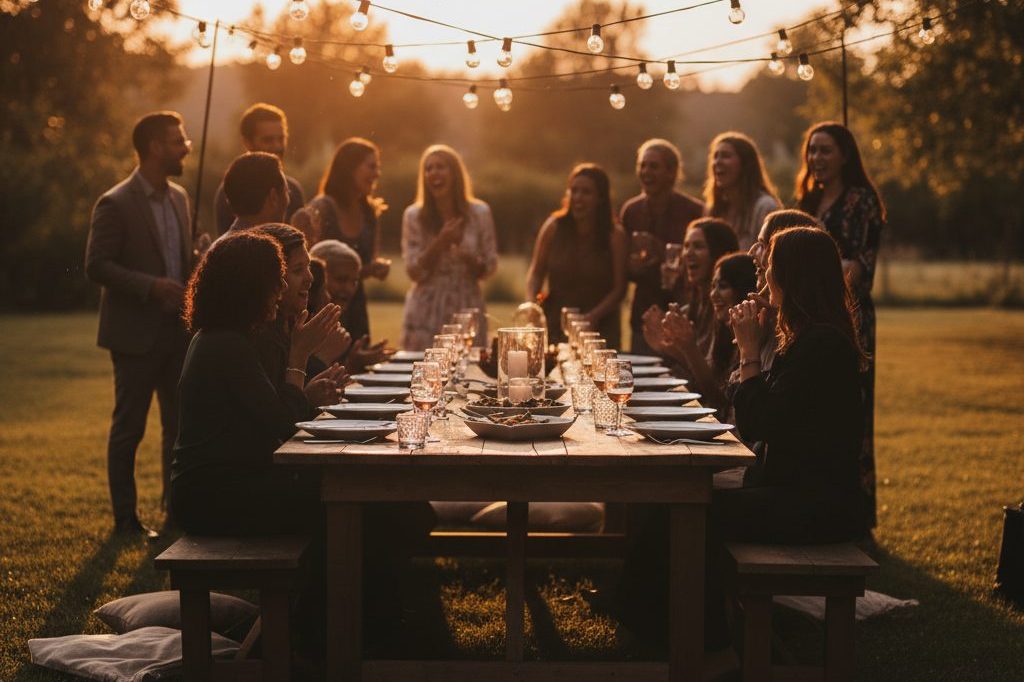
The rise of the celebration of life format — often held weeks or months after the death, in a home or rented space rather than a funeral home — has made cannabis much more acceptable at end-of-life gatherings. If the family plans one of these alongside or instead of a traditional service, it often becomes the appropriate place for cannabis traditions in memory of the deceased.
The Final Principle
At a funeral, your job is to make the closest mourners’ day less painful. If cannabis serves that goal in your specific context, it has a place. If it risks making someone’s worst week worse, it doesn’t. Everything else is noise.
For in-depth cannabis education, dosing guides, safety information, and research summaries, visit our partner site TryCannabis.org