Last verified: April 2026
Read This Before You Fly
There is no scenario in which bringing cannabis across an international border is a reasonable risk. None. The consequences in some countries are measured in decades. In a few, they are measured in lives. This is not a cautious framing — this is the actual state of the law in the places described below, enforced against Americans and other Western travelers every year.
If you remember nothing else: never bring cannabis through any international airport, never in your luggage, never in your pockets, never in your carry-on, never CBD, never edibles, never vape carts. Consume at your destination only if it is legal there, and never carry across a border.
The Hardest Jurisdictions
Singapore
Possession of any amount of cannabis can result in up to 10 years imprisonment and caning. Trafficking (defined by weight) at 500 grams or more can trigger the death penalty. Singapore executes drug traffickers; it has carried out marijuana-related executions in recent years and shows no sign of softening. Changi Airport is one of the most heavily screened in the world. This is not a country where you improvise with cannabis.
United Arab Emirates (Dubai, Abu Dhabi)
Minimum 4 years in prison and approximately $36,000 in fines for possession of any amount of cannabis, including CBD and including trace amounts detected on clothing or skin. Recent legal reforms reduced some penalties but possession remains a serious criminal matter. The UAE’s airports run extensive chemical detection at customs, and the country has imprisoned tourists whose luggage contained trace cannabis residue from a previous trip.
Malaysia
Possession is a serious offense with long prison sentences. Trafficking — legally defined at 200 grams — carries a mandatory death sentence. Malaysia occasionally commutes death sentences but has carried out executions as recently as the 2020s. Not a country to chance it.
Japan
Both THC and CBD are prohibited. Possession leads to arrest, typically a 20-day detention period during investigation (legal in Japan without charges), followed by prosecution. Convictions carry up to 5 years. Japan enforces on tourists with limited sympathy for Western legal frameworks. American celebrities and athletes have been detained and deported. Even CBD gummies from a U.S. pharmacy can trigger the same process.
South Korea
Particularly notable for reaching its own citizens abroad: Korean nationals who legally consume cannabis in the United States can be prosecuted upon return to Korea under Korean law, even for conduct that was legal where it occurred. Tourists caught with cannabis face arrest and deportation.
China
Strict prohibition. Serious consequences for possession including lengthy prison sentences and in some cases, capital punishment for trafficking.
Saudi Arabia
Strict prohibition with harsh penalties including corporal punishment and long imprisonment.
Russia
The Marc Fogel case is the reference point every U.S. traveler should know. Fogel, an American teacher, was arrested in August 2021 at Sheremetyevo Airport with approximately half an ounce of medical marijuana purchased legally with a Pennsylvania medical marijuana card. He was sentenced to 14 years in a Russian penal colony. He was eventually released in a prisoner exchange in early 2025 after more than three years in custody. Russia’s drug laws do not recognize any foreign medical framework, and the geopolitical context makes consular protection unreliable.
Indonesia, Philippines, Vietnam, Cambodia
Strict enforcement. Several Western tourists have served multi-year sentences in local prisons for small personal amounts. The Philippines under recent administrations has been especially harsh.
Turkey, Egypt, Morocco
Despite tourist-city casualness, all three have serious cannabis laws on the books and prosecute tourists. Morocco is a major cannabis-producing country but sale, possession, and export remain illegal and foreigners are prosecuted.
A legally purchased medical product from a legal U.S. state became a 14-year sentence in a Russian penal colony. The Pennsylvania medical marijuana card was no protection. U.S. State Department consular services were no protection. The lesson is simple and permanent: medical cards do not transfer across borders, full stop. Many countries view any cannabis as a serious crime regardless of the paperwork in your wallet. Do not test this.
Federal-Legal Countries
Canada
Recreational cannabis legal nationwide since October 2018. Adults can purchase at licensed retailers across all provinces. Use laws vary by province (consumption location, public use, possession limits). However, you cannot bring cannabis across the U.S.-Canada border in either direction. This is a surprisingly common mistake. Canadian cannabis from a Canadian dispensary is a federal offense the moment it crosses into the United States, and vice versa. Both countries’ border agents aggressively enforce. Buy in the country you are in.
Uruguay
First country in the world to legalize recreational cannabis federally (2013). Purchase is restricted to Uruguayan citizens and residents — tourists cannot legally purchase at pharmacies. A gray market supplies tourists. Tolerant culture, strict paperwork.
Tolerant or Liberalized Countries
Netherlands
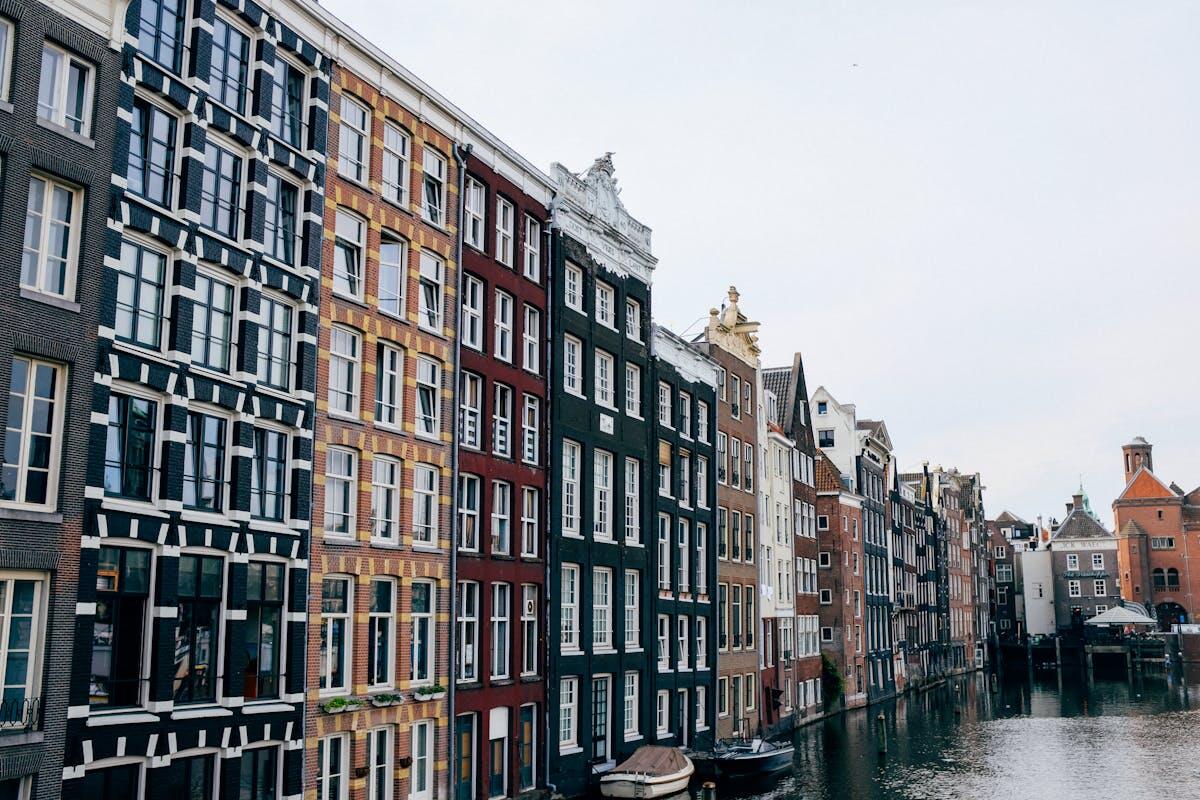
Coffeeshops in Amsterdam and other cities tolerate sale and use of small amounts for personal consumption. Technically cannabis is illegal; the policy is a “gedoogbeleid” (tolerance policy). You can consume at licensed coffeeshops. You cannot bring it out of the country — Dutch customs and neighboring EU customs (Germany, Belgium, France, the UK) enforce strictly at borders.
Germany
Legalized adult possession (up to 25g) and home cultivation in April 2024, with “cannabis social clubs” permitted. Purchase through pharmacies is expanding. Consumption rules are strict in public spaces. Importing from other countries remains illegal.
Thailand
Effectively legalized in 2022, creating thousands of dispensaries and a booming cannabis tourism economy. Regulatory structure is in flux and a more restrictive framework has been debated. Tourists can purchase from licensed shops. Cannabis cannot be exported.
Portugal, Switzerland, Spain, Czech Republic, Luxembourg
Various degrees of decriminalization and limited legal markets. Rules vary. Portugal decriminalized all drugs in 2001 but commercial sale is not legal. Spain tolerates private cannabis clubs. Research the specific country before going.
Mexico
Supreme Court declared criminal prohibition unconstitutional in 2021, but regulated commercial sale has not been fully implemented. Possession of small amounts is not generally prosecuted but is technically illegal. Do not assume casual tolerance means legality.
The U.S. Border Admission Problem
One of the most underappreciated risks: admitting past cannabis use to a U.S. Customs and Border Protection (CBP) agent can result in a lifetime ban from entering the United States, even for conduct that was legal where and when it occurred.
CBP agents at border crossings and international airports can and do ask: “Have you ever used marijuana?” An honest “yes” — even for a single joint 20 years ago, in a legal state, as a U.S. citizen’s own recreational use — can trigger denial of entry for non-citizens and, for anyone, flagging in the system. Thousands of Canadian citizens have been permanently banned from the U.S. after admitting past cannabis use, including people who work in the legal cannabis industry in Canada.
Guidelines for crossing a U.S. border:
- Do not lie — that is a separate federal offense.
- Do not volunteer information about cannabis use.
- If asked directly and uncomfortable answering, say: “I don’t wish to answer that question.” This can result in denied entry that day but does not permanently mark your record the way an affirmative admission can.
- For non-citizens: talk to an immigration attorney before any border crossing if you have any cannabis history.
CBD Across Borders
Hemp-derived CBD is legal in the U.S. federally with 0.3% THC or less. It is not legal in Japan, Russia, Singapore, UAE, Saudi Arabia, China, or many other jurisdictions. CBD-labeled products are treated the same as THC products by customs in those countries. Chemical testing does not distinguish between hemp CBD and cannabis CBD when it comes to cannabinoid detection.
Rule: do not fly internationally with any cannabis or CBD product in your luggage, even if it’s in a pharmacy package from a U.S. health store.
What To Do If Detained Abroad
- Be polite, say as little as possible.
- Ask immediately to contact the nearest U.S. embassy or consulate.
- Do not sign anything in a language you don’t read.
- Do not plead guilty without a lawyer who practices in that country.
- Notify family at home so they can engage with the State Department.
Consular officers can visit, provide a list of local attorneys, and contact family. They cannot get you released, pay your bail, or override local law. U.S. embassies process thousands of Americans-abroad drug cases a year; they are experienced but not all-powerful.
The Short Version
The world is not America. Many countries treat cannabis as a serious crime. Singapore and Malaysia can execute traffickers. UAE imprisons for trace amounts. Japan arrests for CBD. Russia proved that even a medical card is no protection. Canada and Uruguay are federally legal but the border itself is not. Admitting past use to a U.S. CBP agent has ended thousands of Canadians’ U.S. travel for life. Consume where it is legal, where you are. Never at a border. Ever.
For in-depth cannabis education, dosing guides, safety information, and research summaries, visit our partner site TryCannabis.org