
Last verified: April 2026
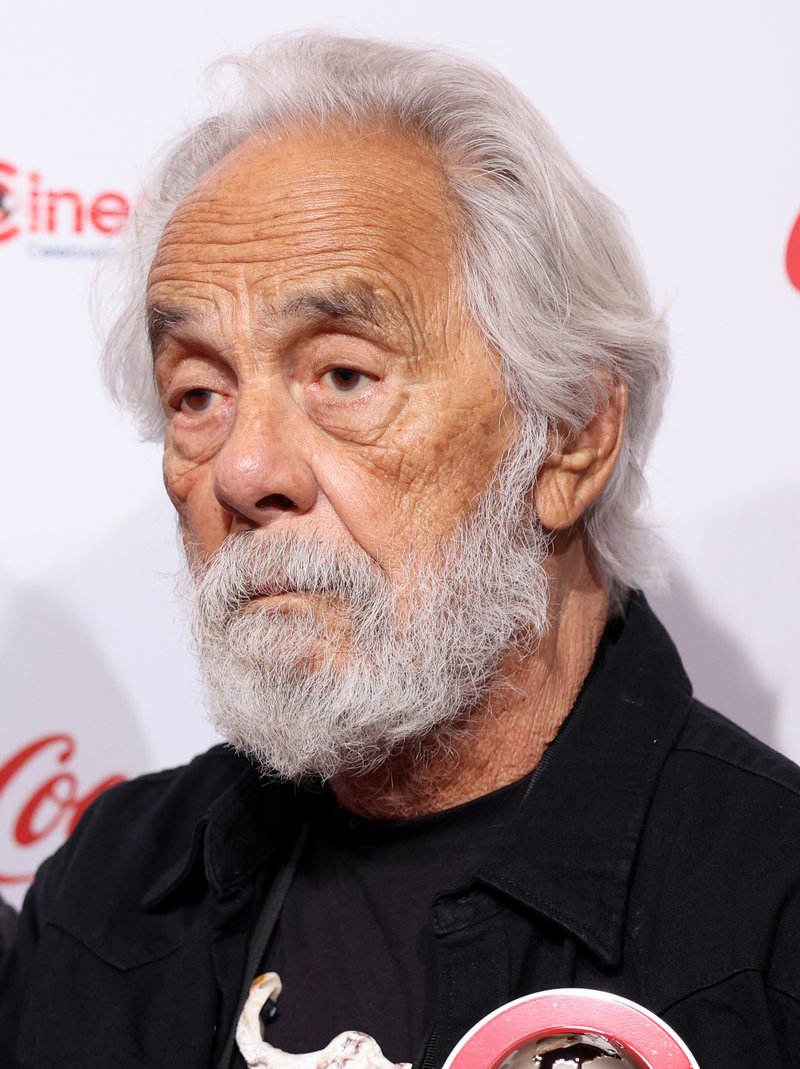
Who He Is
Thomas B. "Tommy" Chong (born May 24, 1938, in Edmonton, Alberta) is a Canadian-American comedian, actor, musician, and activist, and one half of the legendary comedy duo Cheech & Chong with Richard "Cheech" Marin. The two met in Vancouver in the late 1960s, worked through improvisational comedy into a recorded-album career in the early 1970s, crossed into film with Up in Smoke (1978), and — more than any other pair of entertainers in American history — built "the stoner" as a recognizable comic archetype. Every stoner comedy of the last fifty years, from Friday to Harold & Kumar to Pineapple Express, operates inside a genre Cheech and Chong invented.
Chong is also, uniquely on this list, a person who went to federal prison for cannabis paraphernalia as recently as 2003 — a biographical fact that put a visible face on a Bush-era enforcement campaign most Americans had never heard of.
Key Contributions
- Big Bambú (1972). Cheech & Chong's second album, famously packaged as a giant rolling-paper pack with a real oversized rolling paper enclosed. It became one of the best-selling comedy albums in history and is the single clearest artifact of the duo's early genius for merchandise-as-joke-as-merchandise.
- Los Cochinos (1973) — won the 1974 Grammy for Best Comedy Album. The duo's first and most critically recognized Grammy.
- Up in Smoke (1978). Directed by Lou Adler, the film was a low-budget road comedy that became a cult classic and grossed more than $44 million on a budget of around $2 million. It established the full Cheech & Chong cinematic universe and effectively invented the feature-length stoner road movie.
- The Counterculture Hall of Fame, 2007. High Times inducted Cheech & Chong into its Counterculture Hall of Fame in 2007, alongside earlier inductees Bob Marley, Louis Armstrong, Bob Dylan, and Jack Herer.
- Continuing performance career. Chong has toured with Marin in a reunited Cheech & Chong live show since 2008; has appeared on That '70s Show as the recurring character Leo; and competed on and won Season 19 of Dancing with the Stars in 2014 at age 76.
Signature Moments
Ice Cube's summary. Ice Cube, who directed and starred in the 1995 film Friday — the source of the "puff puff give" line on our bogart page — has said, on the record, that Cheech and Chong's work was a direct model. His exact framing: "Cheech and Chong walked so that Harold and Kumar could run." It is the cleanest single-sentence summary of Chong's cultural influence available.
Operation Pipe Dreams, 2003. In February 2003, the U.S. Drug Enforcement Administration executed a nationwide enforcement action called Operation Pipe Dreams (and a companion, Operation Headhunter), targeting online sellers of bongs, pipes, and other cannabis paraphernalia. Chong was the public face of the operation — his family business, Chong Glass / Nice Dreams Enterprises, run largely by his son Paris Chong, had been selling pipes online. Chong pleaded guilty to one felony count of distributing drug paraphernalia and was sentenced in federal court in Pittsburgh to nine months in federal prison, a $20,000 fine, and forfeiture of $103,000 in business assets.
Of the 55 people charged in Operation Pipe Dreams, Chong was the only one sentenced to prison time. Prosecutor Mary Beth Buchanan specifically cited his film career and comedy albums as having "trivialized law enforcement efforts to combat drug trafficking" — a sentencing rationale that struck most observers as unconstitutional on its face and has been studied in First Amendment scholarship ever since. Chong served his sentence at Taft Correctional Institution in California. He has spoken and written extensively about the experience, including in the 2006 documentary a/k/a Tommy Chong.
Three reasons. First: Chong's role in the paraphernalia business was administrative and promotional, not operational — his son ran the company. Second: the sentencing prosecutor explicitly punished him for his comedy, which is the opposite of how First Amendment law is supposed to work. Third: he was the single individual sent to federal prison out of 55 defendants, in an operation that by any reasonable accounting should have produced zero prison sentences. Operation Pipe Dreams is one of the clearest examples in the War on Drugs of celebrity being punished rather than rewarded.
Legacy and Current Status
Chong, now 87, remains active. He continues to tour with Cheech & Chong, operates the Chong's Choice cannabis brand in multiple legal states, and has survived two rounds of cancer — rectal cancer in 2012 and prostate cancer in 2015 — both of which he has publicly credited cannabis and cannabis oil with helping him manage, alongside standard treatment. (That is his framing. It is not a medical claim this site endorses.)
His cultural legacy is enormous and not subtle: he made stoner comedy safe for mass audiences, put cannabis into mainstream film and Grammy-winning albums during the hardest years of the Nixon and Reagan drug wars, and then, in middle age, went to federal prison so that the absurdity of the paraphernalia-prosecution era could be visible on the evening news. Every subsequent cannabis-related comedy owes him directly.
The core Cheech & Chong bit — two friends, one couch, the world's problems — is etiquette instruction in disguise. They are kind to each other. They share. They do not pressure. They laugh at themselves. They are gentle with people who are newer to cannabis than they are. Strip the hair and the van and the 1970s production values, and what remains is old-school cannabis hospitality: warmth, generosity, and no stakes. That is still the target.
For the film-history context, see our bogart page (the Friday lineage) and our Seth Rogen profile (the 2000s stoner-comedy update). For the political backdrop, see our Jack Herer profile.
For in-depth cannabis education, dosing guides, safety information, and research summaries, visit our partner site TryCannabis.org