
Last verified: April 2026
Why Storage Is an Etiquette Issue
Storage sits at the intersection of safety, legality, and consideration for the people and animals who share your space. A gummy left on a coffee table is an accident waiting to happen for a toddler, a dog, a curious teenager, and sometimes a guest’s elderly grandparent who mistakes it for candy. A joint in a kitchen drawer is a custody liability in a contentious divorce. A vape pen on a nightstand is a missing-object report when your nephew visits.
Safe storage is the lowest-effort, highest-impact thing you can do in your home. It also happens to be, in most legal states, required by law for medical patients and sometimes for recreational consumers too.
The Four Storage Goals
Good cannabis storage does four things at once:
- Keeps it away from children and pets. This is the headline reason and the life-safety one.
- Keeps it discreet from visitors, houseguests, and in-laws who haven’t been briefed.
- Preserves the product: flower stays fresh, edibles don’t go stale, concentrates don’t degrade.
- Keeps it clearly labeled so there’s never a mystery about what something is or how strong it is.
The Minimum Viable Setup
You can solve 95% of home cannabis storage with about $50 of gear:
- A small lockbox with a key or combination lock. The ones marketed for medication storage work perfectly. Big enough for several jars, a vape, and a stack of edibles. Keep the key somewhere children can’t reach and somewhere you’ll remember.
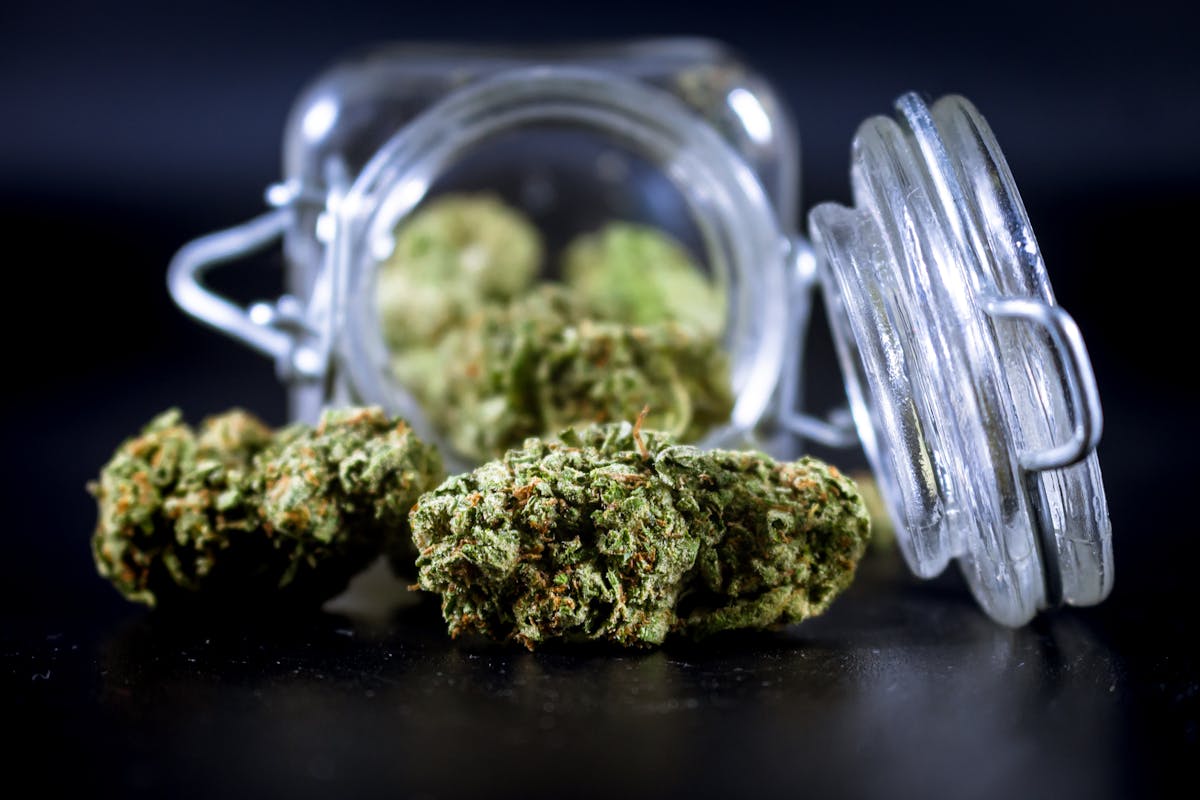
- Airtight glass jars with rubber gaskets for flower. Dark-tinted glass is better but not essential if the lockbox is opaque and kept closed.
- Humidity packs (Boveda 62% or similar) in each flower jar. Keeps flower from drying out or over-moistening.
- Original child-resistant packaging for edibles. Do not transfer gummies into a candy dish, a plain zip-top bag, or an unlabeled tin. Keep them in the dispensary packaging with the dose per piece clearly visible.
- A labeled box or bin for vape carts and pens, inside the lockbox. These look like e-cigarettes to a kid and like regular vapes to a houseguest.
For higher-volume users or medical patients, upgrade the lockbox to a small safe bolted to a shelf. For households with climbers, put the safe up high and locked.
If you take one thing from this page, take this: a basic lockbox costs less than dinner and prevents almost every pediatric and canine cannabis emergency. It also prevents the custody lawyer cross-examination, the sibling borrowing without asking, the houseguest finding something they didn’t want to find. Buy it today.
Edibles: The Highest-Stakes Category
Edibles cause the overwhelming majority of pediatric and pet cannabis emergencies for one obvious reason — they look like food. A chocolate chip cookie with 100 mg of THC in it and a chocolate chip cookie from the bakery look identical. Treat edibles as the most dangerous thing in your cannabis collection:
- Never transfer edibles into generic containers. The dispensary packaging is marked with dose, onset time, and manufacturer for a reason. Cannabis first responders and veterinarians need that information if something goes wrong.
- Never leave an open package out. The single most common ingestion scenario: parent takes one gummy, leaves the package on the counter “for later,” forgets about it, toddler or dog finds it.
- Separate chocolate edibles from where dogs can reach them, absolutely. Chocolate is independently toxic to dogs — an edible brownie is a double threat. See our pets and edibles page.
- Label any homemade infusions clearly, by dose and date, in containers that do not resemble normal food.
Flower: Cool, Dark, Dry, Closed
Cannabis flower degrades when exposed to heat, light, and air. Stored badly it goes brittle, loses terpenes, and can develop mold if too humid. Stored well it holds its character for six months to a year.
- Glass, not plastic. Plastic bags produce static that pulls trichomes off the flower.
- A cabinet away from the stove, radiator, or direct sun.
- Room temperature is fine. Refrigerating and freezing are mostly unnecessary and can introduce condensation problems when jars come back to room temp.
- Humidity around 60%. Too dry and flower crumbles; too wet and it molds. Humidity packs make this automatic.
Concentrates and Vapes
Concentrates — shatter, wax, live resin, rosin — are the most potent cannabis products in the home, often 70% to 95% THC. They degrade fastest at high temperatures. Store in the original silicone or glass container, in the coldest spot in the lockbox, out of light. Vape carts should be stored upright to prevent the oil from pooling at the mouthpiece. A pen left in a hot car can leak or fail outright.
Tinctures, Capsules, and Topicals
Treat tinctures like any other medication: small bottles with droppers, in the lockbox, out of reach. Capsules look like vitamins — do not mix them into a general medicine cabinet where a visitor looking for ibuprofen might grab one. Topicals are lower-risk (they’re not intoxicating at normal application doses) but can still cause confusion if mistaken for body lotion.
Traveling Around the House
The failure mode in most households isn’t the storage cabinet — it’s the trip from the cabinet to the couch. A gummy taken out and set down on a side table “just for a minute” becomes the toddler emergency. Rules that work:
- Take one dose out, close the package, put the package back.
- Eat the gummy now, don’t pocket it for later.
- Never leave a vape pen on the arm of the couch.
- If you walk away, take it with you or put it back.
When You Have Houseguests
Lock it even if you think you don’t need to. A visiting grandchild, a friend’s curious teenager, a niece home from college, an in-law looking through cabinets for a glass — you don’t know what guests will encounter. “Normally it’s fine” is where bad stories start.
When You’re the Houseguest
Bring your own travel case (the smell-proof bag category of product is built for this). Don’t leave cannabis loose in a guest room. If children live in the house, ask where it’s safe to keep it — and offer to keep it in your car or luggage rather than on the guest nightstand.
The Custody and Insurance Angle
In a custody dispute, unlocked cannabis in a home with children can be introduced as evidence of negligence regardless of legality. In a homeowners’ insurance claim involving a child ingestion, unlocked storage can complicate coverage. In a divorce, photographs of an unlocked kitchen drawer with edibles in it are the kind of thing lawyers screenshot. Lock it. Every time. See cannabis and custody for more.
Safe storage is the cheapest and highest-leverage move in cannabis parenting and cannabis homeownership. Thirty-five dollars and ten minutes.
For in-depth cannabis education, dosing guides, safety information, and research summaries, visit our partner site TryCannabis.org